
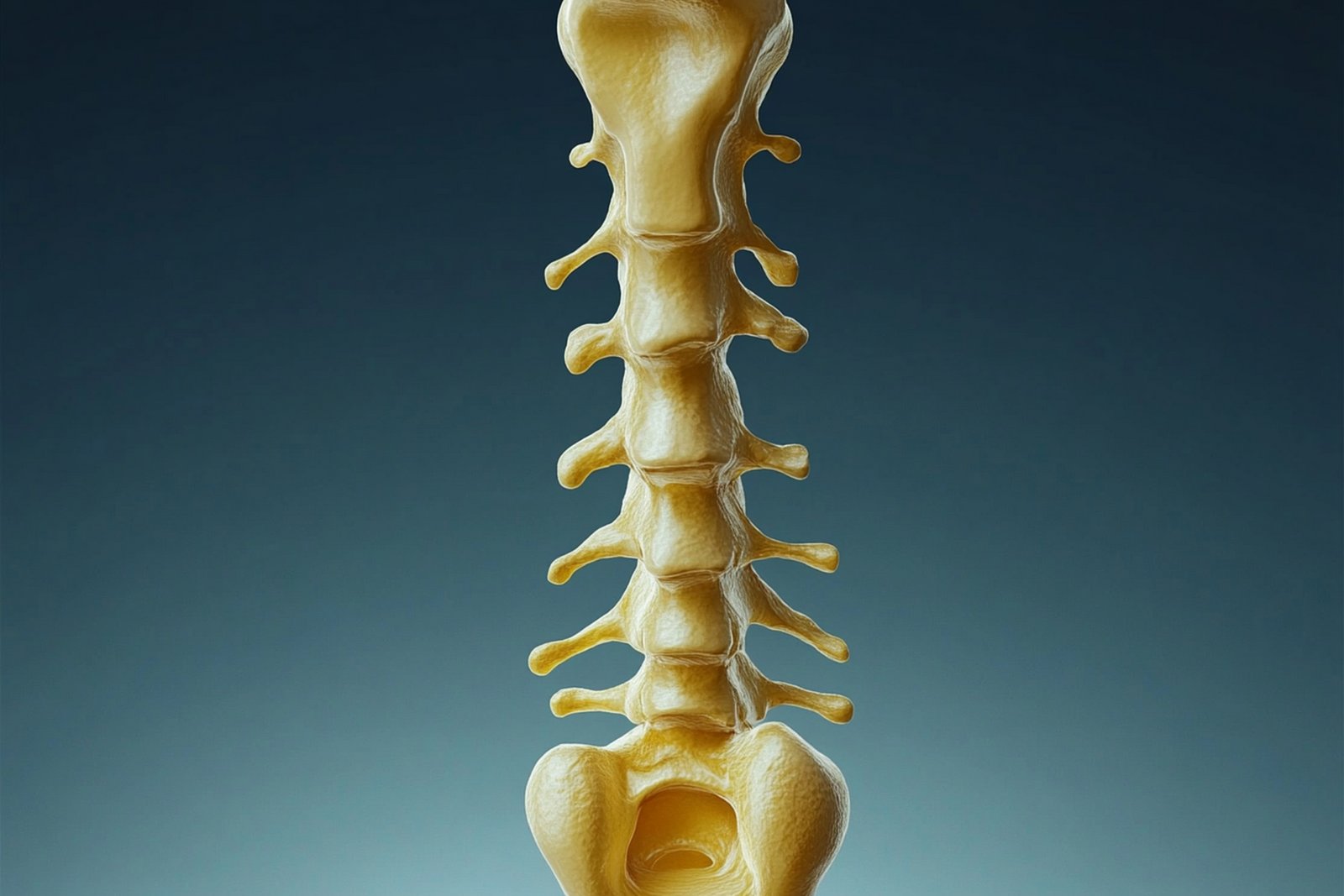
Dr. Charla Fischer, a board-certified orthopedic spine surgeon in New York City, performs both lumbar laminectomy and minimally invasive lumbar spinal fusion. Whether the two happen in the same operation comes down to one question: once pressure is off the nerves, is that level of the spine still stable? Here is how surgeons weigh that, and what two large trials found.
What a Laminectomy With Fusion Involves
It is two jobs in one operation — taking pressure off the nerves, then holding the level steady. The laminectomy is the decompression: as Dr. Fischer's lumbar laminectomy page describes it, the lamina — the back part of the vertebra — is removed in part or completely, along with the overgrown soft tissue pressing on the nerves. The fusion is the stabilizing half: her fusion page explains that bone grafts are placed so the vertebrae unite and motion no longer occurs between them, with instrumentation supporting the spine while the graft heals over several months.
Why Fusion Is Sometimes Added — and Often Isn't
Removing the lamina by itself does not usually destabilize anything. Dr. Fischer's laminectomy page is direct about this: the bone removed "is not important for the structural support of the spine so removing this bone does not lead to instability or dysfunction." That is why many lumbar decompressions are done on their own.
Fusion enters the picture when the level was already unstable, most often because of degenerative spondylolisthesis — one vertebra has slipped forward on the one below it. The AAOS puts it the same way: if arthritis has progressed to spinal instability, a surgeon may recommend combining decompression with stabilization. Dr. Fischer's fusion page also lists deformity and painful degenerative discs as reasons, and notes that decompression "is often done together with a fusion." The evaluation looks past the MRI picture of the narrowing — whether flexion and extension X-rays show the level moving, how much of the joint must be removed to free the nerves, and whether back pain or leg pain dominates. Surgery is not the first move either way: the AAOS is explicit that nonsurgical care for lumbar spinal stenosis comes first, and that many people find it relieves their symptoms.
Decompression Alone vs. Decompression With Fusion
| Laminectomy alone | Laminectomy with fusion | |
|---|---|---|
| What it addresses | Nerves pinched by stenosis | Pinched nerves plus an unstable level |
| What is done | Lamina and overgrown soft tissue removed | The same, plus bone graft and instrumentation |
| Motion at that level | Kept | Intentionally stopped |
| Going home | Often the same day or the next | Usually two to three more days in hospital |
| Healing | Normal activities in a few weeks for many people | Complete healing may take around six months |
Those timings come from the AAOS and the Cleveland Clinic. They are typical ranges, not a schedule. Dr. Fischer's guide to laminectomy recovery walks through the first six weeks stage by stage.
What Two Trials Published the Same Day Found
On 14 April 2016 the New England Journal of Medicine ran two randomized trials on exactly this question, and they did not agree. The SLIP trial (Ghogawala and colleagues) randomized 66 patients aged 50 to 80 with stable grade I degenerative spondylolisthesis and symptomatic stenosis. At two years the fusion group had a larger gain in physical quality-of-life scores than the decompression-alone group (15.2 points versus 9.5); disability scores did not differ significantly. The fusion group lost more blood and stayed longer in hospital. Over the follow-up, 14% of the fusion group needed another operation, against 34% of those decompressed alone.
The Swedish Spinal Stenosis Study (Försth and colleagues) randomized 247 patients aged 50 to 80 with stenosis at one or two levels, with or without spondylolisthesis. At two years there was no significant difference in disability scores (27 with fusion, 24 without) or in how far patients walked in six minutes, and the picture was unchanged at five years. Average hospital stay was 7.4 days with fusion and 4.1 days without. Over a mean of 6.5 years, 22% of the fusion group and 21% of the decompression-alone group had further lumbar surgery.
The trials enrolled different people — one a narrowly defined slip, one stenosis broadly — which is much of why they landed differently. Together they are why fusion is treated as a decision to be argued for case by case, not a routine addition.
Risks
Recognized risks of a lumbar laminectomy, per the Cleveland Clinic, include infection, nerve damage, bleeding, blood clots, headaches, bowel or bladder problems, little or no pain relief, and back pain returning later. A second operation is possible either way — in the SLIP trial, 34% after decompression alone and 14% after fusion. Fusion adds its own trade-offs seen in both trials: a longer operation, more blood loss and a longer stay, and the graft must heal over months before the fusion is solid. Dr. Fischer reviews the risks that apply to your own spine before surgery.
How to Get Help
If you have been told you need a lumbar decompression and are unsure whether a fusion belongs with it, that question is worth a consultation and a look at your own imaging. It may help to read how a microdiscectomy differs from a laminectomy first. Dr. Fischer sees patients at NYU Langone Center for Musculoskeletal Care, 333 East 38th Street, 6th Floor (646-501-7200), and NYU Langone Madison Orthopedic Surgery Associates, 145 East 32nd Street, 4th Floor (212-427-3986). Contact Dr. Fischer to schedule a consultation.
Sources: Ghogawala Z, et al. N Engl J Med. 2016;374:1424-34 (SLIP); Försth P, et al. N Engl J Med. 2016;374:1413-23; Cleveland Clinic, Laminectomy; AAOS, Lumbar Spinal Stenosis; AAOS, Cauda Equina Syndrome; Dr. Fischer's lumbar laminectomy and minimally invasive lumbar spinal fusion pages.
Frequently Asked Questions
Is a laminectomy with fusion a major surgery?
It is more involved than decompression on its own. The AAOS notes that adding a fusion typically means two to three more days in hospital, and both 2016 trials found a longer operation and more blood loss in the fusion groups. Your surgeon can explain what your own spine requires.
Can a fusion be added later if I have a laminectomy alone first?
Further surgery after decompression alone does happen. In the SLIP trial, 34% of the decompression-alone group had another operation during follow-up, compared with 14% of the fusion group. The Swedish trial found no such gap. Whether a later fusion is the right answer depends on why symptoms returned.
Will I lose movement in my lower back after a fusion?
At the fused level, yes, and that is the intent. Dr. Fischer's fusion page explains that the vertebrae are united so that motion no longer occurs between them, which is what reduces pain coming from an unstable level. The rest of the spine keeps moving.
Can a laminectomy with fusion be done minimally invasively?
Dr. Fischer performs minimally invasive lumbar spinal fusion. Her page describes using small percutaneous incisions instead of the traditional midline technique, which allows for less muscle damage and faster recovery. Whether the approach suits your anatomy is decided at the consultation.
What is the success rate of a laminectomy with fusion?
Neither 2016 trial reports a single success rate. Both found patients improved after surgery. They differed on whether fusion added benefit: the SLIP trial favored fusion on quality-of-life scores in grade I spondylolisthesis, while the Swedish trial found no difference in disability at two or five years.