
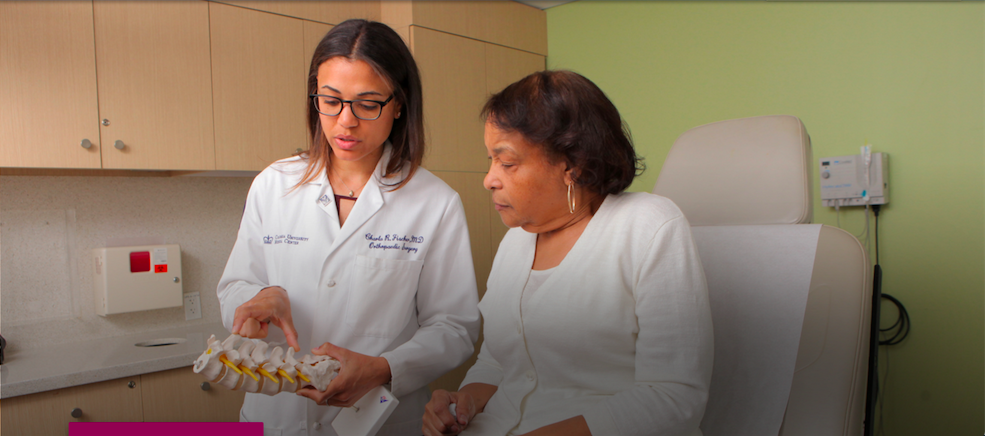
Dr. Charla Fischer, a board‑certified orthopedic spine surgeon in New York City, sees osteoporosis‑related spinal fractures frequently and helps patients understand how to treat and prevent these injuries.
What Is Osteoporosis?
Osteoporosis is a condition in which bones become thinner, weaker, and more fragile. Because vertebrae are made of bone, they are especially vulnerable to collapse when osteoporosis is present. This can lead to a type of spinal fracture called a vertebral compression fracture, where the vertebral body collapses and loses height.
How Spinal Fractures Happen
In people with osteoporosis, even everyday activities like bending over, lifting light objects, or turning in bed can lead to fractures. These fractures often occur without a major trauma and may go undiagnosed until imaging is done.
Symptoms of Spinal Fractures
- Sudden onset of back pain, often in the middle or upper back
- Pain that worsens with standing or walking
- Height loss over time
- Stooped posture or development of a spinal “hump”
- Reduced mobility and difficulty performing daily tasks
Sometimes, vertebral fractures do not cause noticeable pain, especially in the early stages. That’s why medical evaluation is important if you’re at risk for osteoporosis and start experiencing back discomfort.
Diagnosing Osteoporosis‑Related Fractures
Diagnosis begins with a detailed physical exam and medical history, followed by imaging studies such as X‑rays, MRI, or CT scans. These tests confirm whether a vertebra has fractured and whether additional spinal structures are involved.
Treatment Options: From Conservative to Surgical
Many people benefit from conservative care such as pain management, rest, and activity modification. However, when fractures lead to severe pain, instability, or neurological symptoms, surgical intervention may be recommended.
Dr. Fischer specializes in advanced, minimally invasive procedures like vertebroplasty and kyphoplasty, which stabilize the fractured bone and often provide rapid pain relief. These approaches strengthen the vertebrae and can help restore height lost due to compression.
Preventing Future Fractures
Once an osteoporosis‑related fracture has occurred, the risk of another fracture is high, especially without proper management. Treatment goals include stopping further bone loss and strengthening bone health through:
- Calcium and vitamin D supplementation
- Weight‑bearing and spine‑strengthening exercises
- Nutrition optimization to support bone health
- Medication when appropriate to treat underlying osteoporosis
Fall prevention strategies and regular monitoring can also reduce the risk of future fractures.
Related Spine Health Resources
Explore more information on related conditions and treatments:
- Spinal Fracture vs Back Strain: How to Tell the Difference
- Minimally Invasive Spine Surgery
- Spondylolisthesis Explained
- What Is a Herniated Disc?
Get Expert Spine Care
If you’re dealing with osteoporosis‑related back pain or a spinal fracture, contact Dr. Fischer for a comprehensive evaluation and individualized treatment plan.
Call: (646) 501‑7200
Location: 333 East 38th Street, 6th Floor, New York, NY 10016