
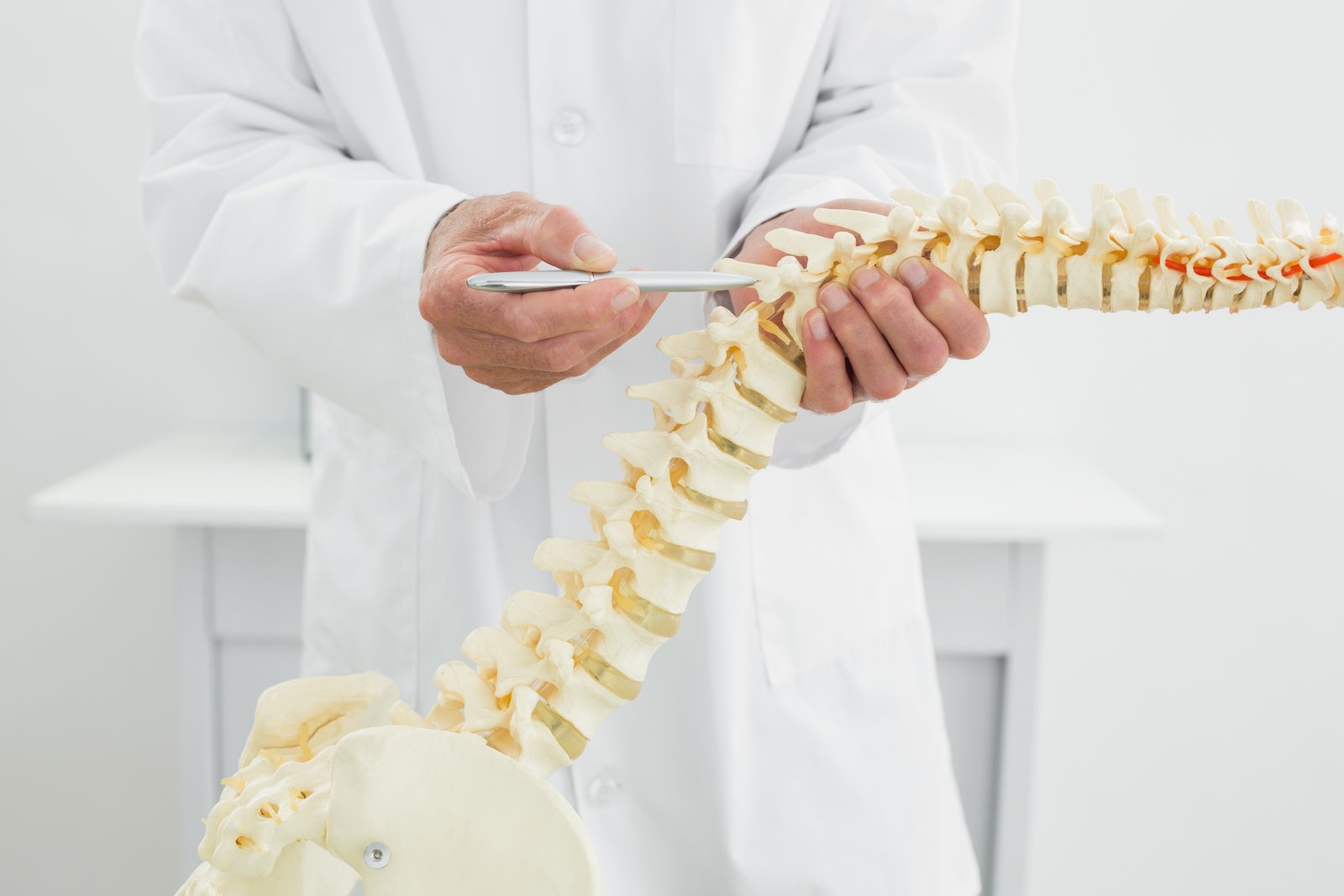
Dr. Charla Fischer, a board‑certified orthopedic spine surgeon in New York City whose practice focuses on the cervical spine, performs posterior cervical laminoplasty. Here is how the operation relieves pressure on the spinal cord, who it helps, and what recovery involves.
What Is Cervical Laminoplasty?
Laminoplasty opens up the spinal canal in the neck to relieve pressure on the spinal cord and nerves. As Dr. Fischer’s laminoplasty page explains, it is performed from the back of the neck. The lamina, the bony roof at the back of the spinal canal, is opened to take pressure off the compressed nerves. The bone may then be held in its new, opened position with bone or with plates and screws.
Unlike a laminectomy, which removes the lamina, laminoplasty reshapes it, and it preserves motion in the neck.
Who Is It For?
Laminoplasty is used for spinal stenosis in the neck and for cervical spondylotic myelopathy, which is spinal cord compression from age-related wear and tear. Symptoms that lead to it can include pain, numbness, weakness in the arms or legs, and balance problems. If you’re not sure whether your symptoms point to the spinal cord, Dr. Fischer’s post on the signs of cervical myelopathy explains what to look for.
It is one of the surgical options Dr. Fischer lists on her cervical myelopathy page, alongside anterior cervical discectomy and fusion (ACDF) and posterior cervical laminectomy and fusion. The right choice depends on where the compression is, how many levels are involved, and the alignment of the neck.
How the Surgery Is Done
There are two common ways to open the lamina:
- Open-door technique: the lamina is opened on one side like a hinge and held open with a small metal plate.
- French-door technique: the lamina is opened down the middle and held apart on both sides with spacers or bone graft.
The operation typically takes one to three hours. Some patients go home the same day, and others stay a couple of days.
Laminoplasty vs. Laminectomy and Fusion
| Laminoplasty | Laminectomy and fusion | |
|---|---|---|
| What happens to the lamina | Opened and held in a new position | Removed |
| Neck motion | Preserved | Fused segments no longer move |
| Hardware | Small plates or spacers | Screws and rods to stabilize the spine |
Recovery
Complete recovery usually takes six to 12 weeks. Most people are walking within days, return to light work within weeks, and resume strenuous activities after about six weeks. A cervical collar may be used at first. Dr. Fischer’s after surgery page covers what to plan for at home.
Results
In long-term follow-up, up to 70% of people who had a laminoplasty reported relief of symptoms such as pain and numbness for 10 years after surgery. Results vary from person to person, and the goal of surgery is also to stop the spinal cord from being compressed further.
Risks
Recognized risks include infection, nerve damage, spinal cord injury, a change in the curve of the neck (kyphosis), and stenosis coming back. Laminoplasty also can’t be done at a level of the spine that has already had a laminectomy. Dr. Fischer reviews the risks and alternatives with each patient before surgery.
How to Get Help
If you’ve been told you have narrowing in your neck or spinal cord compression, a consultation can show whether laminoplasty or another operation fits your situation. Dr. Fischer sees patients at NYU Langone Center for Musculoskeletal Care, 333 East 38th Street, 6th Floor (646-501-7200), and NYU Langone Madison Orthopedic Surgery Associates, 145 East 32nd Street, 4th Floor (212-427-3986). Contact Dr. Fischer to schedule a consultation.
Sources: Cleveland Clinic, Laminoplasty (reviewed Sept 2023); NIH StatPearls, Cervical Myelopathy; Dr. Fischer’s laminoplasty, laminectomy and fusion, and cervical myelopathy pages.
Frequently Asked Questions
What is the difference between laminoplasty and laminectomy?
Both relieve pressure on the spinal cord from the back of the neck. A laminectomy removes the lamina, the bony roof of the spinal canal, and in the neck is often combined with a fusion. A laminoplasty opens the lamina and holds it in a new position, which preserves motion in the neck.
How long does it take to recover from laminoplasty?
Complete recovery usually takes six to 12 weeks. Most people walk within days, return to light work within weeks, and resume strenuous activities after about six weeks. A cervical collar may be used at first.
How long does laminoplasty surgery take?
The operation typically takes one to three hours. Some patients go home the same day, and others stay in the hospital for a couple of days.
How successful is cervical laminoplasty?
In long-term follow-up, up to 70% of people who had a laminoplasty reported relief of symptoms such as pain and numbness for 10 years after surgery. Results vary from person to person.
Who is not a candidate for laminoplasty?
Laminoplasty can’t be done at a level of the spine that has already had a laminectomy. Your surgeon will also consider where the compression is, how many levels are involved and the alignment of your neck before recommending it.